
The Science of Spending is Embarrassingly Simple
I've Been Ignoring It.
Henning Voss
5/21/202610 min read
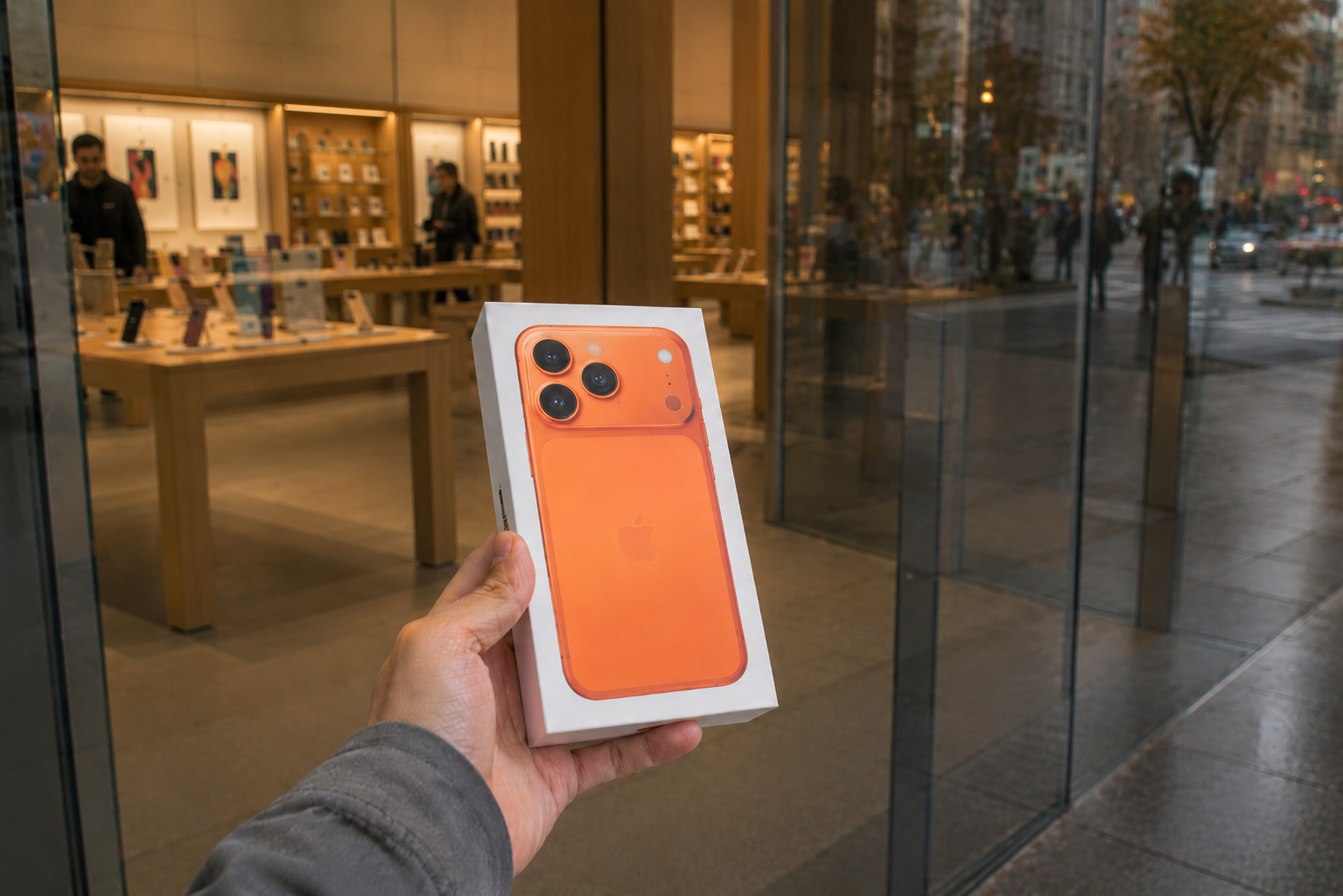
Last year I upgraded my iPhone for the first time in five years. I paid twelve thousand Hong Kong dollars. I chose the orange one, which felt like a decision worth making. I waited for the release date with something that resembled genuine excitement.
Then I spent two weeks re-authorising every banking app on the planet. And once that was done, I held the new phone in my hand and felt approximately nothing. Within a month it was just my phone. The object I touch more than any other in my life had become invisible.
I mention this not to complain about Apple, which is doing fine without my support. I mention it because I recently read two books that explained, with uncomfortable precision, exactly why this happened. And then explained why I would probably do the same thing again.
The Research Nobody Follows
The first book is Happy Money by Elizabeth Dunn and Michael Norton, two researchers who have spent decades studying what spending actually does to human happiness. The second is The Psychology of Money by Morgan Housel, which covers similar territory: why people do strange things with money, and what wealth actually means.
The core finding is this: it is not how much you spend that determines your happiness. It is what you spend it on. And most people, most of the time, including people who have read the research, spend in almost exactly the wrong direction.
Dunn and Norton identify five principles for spending that actually can improve wellbeing. Buy experiences over things. Make good things treats rather than habits. Buy time. Pay now and consume later. And spend more on other people than yourself.
The iPhone Didn't Stand a Chance
The research on experiences versus things is among the most consistent in the field. Experiential purchases, trips, concerts, meals, shared moments, produce more lasting happiness than material ones. Things depreciate emotionally. We adapt to them quickly, they become background, and we are left mildly mystified that they no longer feel new.
Experiences, by contrast, tend to improve in memory. They are harder to compare to other people's experiences. They become part of who you are, not just what you own.
The iPhone is Exhibit A. It is not a bad phone. It is probably a very good phone. It is certainly an expensive phone. And it is now so completely absorbed into my daily life that I would struggle to tell you a single thing about it that I notice. I waited five generations for this upgrade. Five. And the honest answer to "was it worth it" is no, probably not.
Compare that to paragliding in Queenstown, during our family trip to New Zealand last year. My daughters were nine. Jumping off a mountain attached to a stranger and some fabric was not something any of us had planned. It was expensive. I was genuinely uncertain about booking it right up until I did. My wife would not have booked it herself. The kids were worried and then ecstatic and then immediately wanted to talk about it.
That memory is now permanent. The iPhone will be replaced in another few years. The paragliding will not.
The uncomfortable part is that in the moment of purchase, the phone felt more justified. More concrete. More defensible. The experience felt like a gamble. The research says we have this completely backwards, and I am inclined to believe it.
One thing worth saying honestly: the line between experience and thing is blurrier than it sounds. A good mattress affects every night of sleep for a decade. A gym membership can become pure routine within months. The rule is not perfect. But it is right more often than it is wrong.
How to Ruin a Good Thing
We have a sauna at home. This sounds, I realise, like the opening line of a humble-brag, so let me complete the sentence: we have a sauna at home, and I have to force myself to use it.
A sauna at home, it turns out, is just a hot room you feel vaguely guilty for not using.
This was not always the case. For most of my life a sauna was a treat, something that happened on skiing holidays, or when a hotel unexpectedly came with one, or on a rare weekend where circumstances aligned. I genuinely looked forward to it. The warmth felt earned.
Now it is available every day, and it has quietly become an obligation. Something I should do for health reasons, which is not the same thing as something I want to do.
Dunn and Norton call this hedonic adaptation. Abundance destroys appreciation. Frequency kills enjoyment. The BMW driver, research shows, gets no more daily pleasure from their car than the Ford driver, unless they make driving an occasion rather than a commute. We drive a genuinely unremarkable car in Singapore. But when I am on holiday and rent something nicer, stepping into it is a small pleasure every single time. I did not plan it that way, but it works.
We apply the same logic to our holidays with our daughters. We spend significantly on travel, probably our biggest discretionary expense. But we mix it deliberately. Last year the Philippines, simple accommodation, very low key. The year before, something more considered. I am concerned of letting the boutique hotel become the baseline, because the moment luxury becomes expected, it stops being felt. That matters for the kids too. Children who grow up with everything as the norm lose the capacity to be surprised by anything, that seems worth worrying about.
The practical tool I have found most useful against impulse buying starts with recognising the impulse itself. Something catches my eye, an ad, a product, something I suddenly convince myself I need. Rather than buying it, I create a reminder in my task manager thirty days out with a link to the product. If I still want it in a month, I buy it. The number of times I have reached that reminder and felt complete indifference is high enough that I now trust the process entirely. What it does is bring back the waiting that modern commerce has spent years trying to eliminate. One click at a time, every platform we use is designed to shrink the gap between wanting and having to zero. The thirty-day rule pushes back.
Buying Time, and Then Wasting It
The research on buying time is the most immediately actionable of the five principles, and the one that produces the most guilt when you live in Asia and already have domestic help.
We do. We have a helper who assists with cleaning, groceries, cooking, and a range of household tasks. This is an enormous privilege, one that has almost certainly recalibrated our sense of what is manageable, and probably one of the real reasons that moving back to Germany, our home country, feels increasingly theoretical. We are, as I occasionally admit to my wife, somewhat ruined.
But the research strongly supports this kind of spending. People who use money to outsource dreaded or time-consuming tasks report measurably higher life satisfaction than those who buy material goods with the same money. You are not buying a thing. You are buying hours. And hours, spent well, produce happiness in ways that objects generally do not.
The catch, and this is the part the books do not emphasise enough, is that you have to actually use the freed time well. Spending money to escape the grocery run and then filling the extra hour with aimless scrolling produces nothing. It is just a more expensive way to waste an afternoon. Last Tuesday I outsourced something that would have taken me probably about forty minutes. I then spent approximately forty minutes on my phone doing nothing I can now name.
Deciding to buy back time is the easy part. Protecting what you do with it is where most people, myself included, fall short. And there is a subtler point alongside it. Sometimes doing the thing yourself is not inefficiency. It is investment. Learning a skill, understanding how something works, fixing something with your own hands, these build a kind of competence and autonomy that outsourcing quietly takes away. There is a version of buying time that tips into avoiding the struggle that actually teaches you something. Worth watching, especially when the task in question is one you might actually benefit from doing badly for a while.
Vorfreude ist die beste Freude
There is a German expression, Vorfreude ist die beste Freude, which translates roughly as: the joy of anticipation is the best joy. Anticipation is not just the prelude to joy. It is often the best kind of happiness.
The research agrees. In one study, vacationers reported their biggest happiness boost in the weeks before the trip, not during or after. Paying for an experience in advance and consuming it later separates the pain of payment from the pleasure of the thing, and allows the pleasure of anticipation to build in between.
Before our trip to Japan, we read a book with the girls about the country. We planned some of what we wanted to see, jointly, which is rarer than it sounds with two children who have strong opinions about most things. The trip was better for it. The preparation had already made it real before we arrived.
But I will be honest: we could do this much better. We could try Japanese food at home in the weeks before. Watch something set there. Build the anticipation more deliberately rather than doing half of what we planned and then jumping on the plane anyway. The impulse to just go and figure it out on arrival is strong, and it costs something.
What it costs is memory density. The Phuket weekends, easy to organise, pleasant while happening, quickly blurred into one another in ways the Japan trip has not. I have started to prefer doing less, more memorably, over doing more, forgettably. The research supports this. I am only sorry it took me this long to act on it.
Interestingly, the commercial world goes entirely against this principle. Same-day delivery. Instant streaming. One-click everything. The entire system is designed to remove the gap between wanting and having, because the gap is where you are not buying anything. The thirty-day rule is one small countermeasure. Planning holidays slowly and deliberately is another. Neither feels natural at first. Both are worth the effort.
The One That's Hardest to Admit
The most robust finding in the happiness and spending research is also the one most people, myself very much included, follow the least.
Spending money on other people makes you happier than spending it on yourself. This holds across cultures, income levels, and ages. It has been demonstrated in Canada and Uganda and, somewhat charmingly, in studies involving two-year-olds and small crackers. The average ratio of personal spending to spending on others, in representative surveys, is more than ten to one.
I am not going to pretend my ratio is much better.
I have bought fitness watches that lost their appeal within weeks. Gadgets that seemed essential and became clutter. A particular piece of gym equipment I will not name because someone I know reads this blog. Each one felt justified at the time. Each one depreciated faster than anything I have spent on someone else.
The paragliding in Queenstown was, technically, spending on others, on my family, on an experience we shared. It was a bit extravagant. I hesitated longer than I should have. And it is now a permanent part of our family story in a way that nothing I bought for myself on that trip comes close to.
The principle works best when the giving is genuinely chosen, when you feel connected to the recipient, and when you can see the impact. Large anonymous donations to abstract institutions produce less happiness than targeted generosity toward specific people. The thing that matters is connection, not the act of spending in someone else's direction.
I was struck recently by something Simon Sinek observed: there is an entire industry built around becoming a better leader, a better parent, a better sleeper and eater and exerciser. Almost nothing about becoming a better friend. And yet the research on happiness points, consistently and overwhelmingly, toward social connection as the strongest driver of wellbeing.
Nice experiences with friends is a category I demonstrably underinvest in. I know this because I have done the maths in my head, and the conclusion is not flattering. The amount I spent on NFTs and crypto a few years ago, most of which is now worth approximately nothing, would have funded a rather memorable trip with the people I care about most. Instead I have some digital assets that no longer exist in any meaningful sense, and a lesson I apparently needed to learn the expensive way. I am noting all of this here partly to embarrass myself into doing something about it.
What the Research Actually Says
So here is my honest report card against the five principles.
Buying experiences over things: partially passing. The paragliding yes. The iPhone no. A work in progress measured in thousands of Hong Kong dollars.
Making good things treats: genuinely trying, imperfectly executing. The sauna is a cautionary tale I live inside. I use it twice a week and feel nothing. This is progress, apparently.
Buying time: real, privileged, and only half-working because the freed time has a way of disappearing into a phone or computer screen before I notice it has gone.
Paying now and consuming later: improving, mostly through the thirty-day rule and more deliberate holiday planning. Room to do considerably more.
Spending on others: guilty as charged. The ratio needs work. Starting with friends, before someone writes a book about it and I have to read it to figure out that I already knew.
The books are clear. The evidence is solid. The five principles are not complicated. And I have been soft-ignoring most of them for the better part of my adult life, in favour of objects that produced roughly a fortnight of mild excitement before disappearing into the texture of daily life.
The uncomfortable conclusion is not that the research is wrong. It is that knowing something and actually doing it are separated by a gap, and that gap is where commerce lives. Every system around us, the one-click purchase, the same-day delivery, the subscription that quietly removes scarcity, the upgrade cycle that arrives before you have finished appreciating the last thing, is built to keep us spending in exactly the directions the research warns against.
Following the evidence is not just a matter of knowing it. It requires paying attention to the small decisions, the impulse, the upgrade, the convenience, the thing you convince yourself you need on a Tuesday afternoon. Most of those decisions are quietly working against you. The research has been saying so for thirty years. I am only just starting to listen.
The two books referenced in this piece are Happy Money: The Science of Smarter Spending by Elizabeth Dunn and Michael Norton, and The Psychology of Money by Morgan Housel. Both are worth your time, and both will make you look at your last ten purchases with mild discomfort.